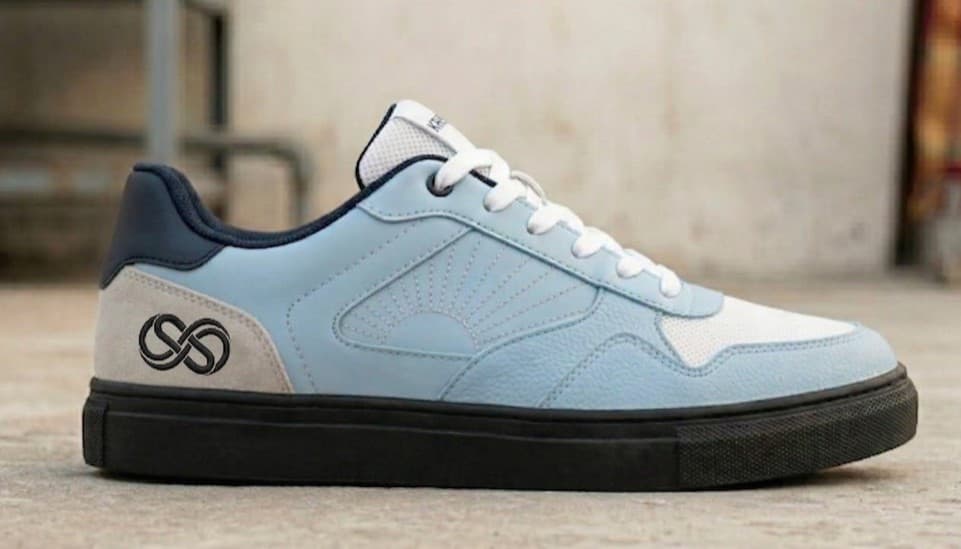
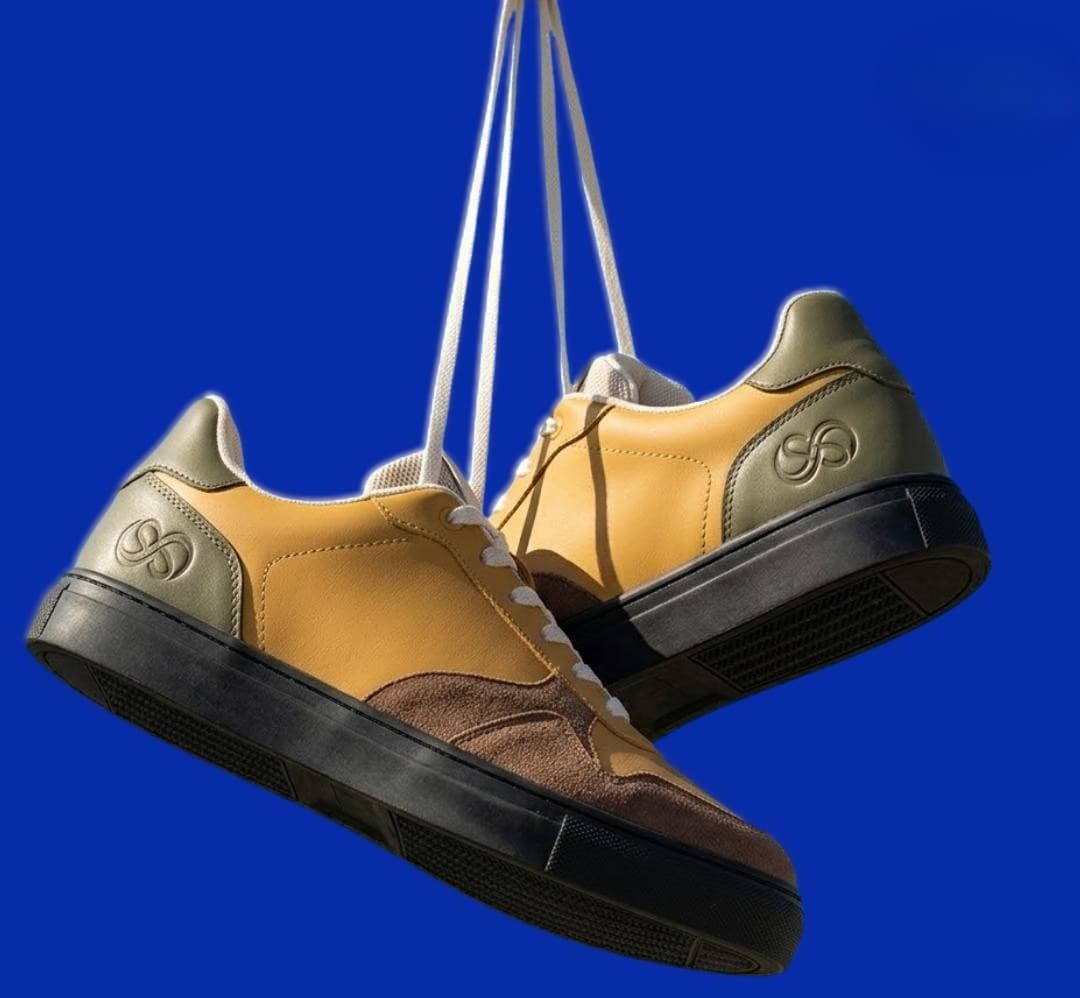
When did you last wash your shoes? Not wipe them down, actually wash them. If you're hesitating, you're not alone: nearly 60% of users report avoiding a pair of shoes altogether because it felt unclean. And here's the harder question: why did you throw away the whole shoe when only the sole had worn out?
That single, deceptively simple question sits at the center of this story. Every year, roughly 22 billion pairs of shoes are discarded worldwide, and more than 90% of them end up in landfills — not because the entire shoe failed, but because one part did. This blog walks through how a student at IIT Kanpur turned that frustration into a patented, modular footwear system through seven prototypes, dozens of failures, and two years of relentless iteration. If you're building a hardware startup, or you're just curious what real product development looks like behind the scenes, this is that story.
The Problem: Footwear Is Broken Across Three Dimensions
Before any prototype existed, the Schault team mapped out exactly why footwear, as a category, was failing consumers:
- Hygiene Crisis: Sweat, dirt, and odour get trapped inside shoes, causing real social anxiety — around 60% of users report hygiene concerns with their footwear.
- Cost Inefficiency: An entire pair gets replaced when only the sole or upper fails, wasting upwards of ₹3,000 per discarded pair.
- Waste Catastrophe: With 22 billion pairs discarded yearly and multi-material composites that are nearly impossible to recycle, 90–95% of footwear ends up landfilled or incinerated.
The irony, as the founders point out, is that India is the world's second-largest shoe manufacturer — yet the category has seen almost no real innovation in decades.
The 7-Prototype Evolution
Prototype 1: Early Experiments with Cardboard and Nails
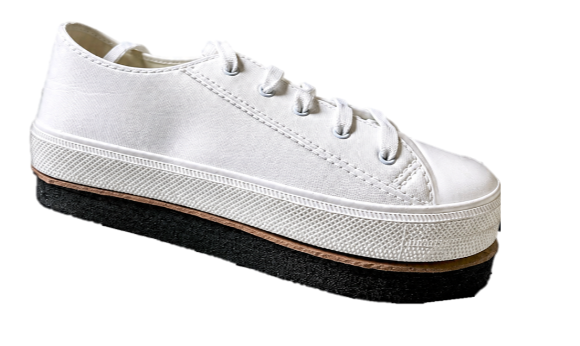
Every hardware product — and yes, a shoe is a hardware product — starts with the cheapest possible way to test an idea. Our very first prototype wasn't glamorous: a basic canvas sneaker with a sole crudely attached using cardboard as a structural spacer and nails as fasteners.
The goal at this stage was never comfort, aesthetics, or durability. It was singular: prove that our core sole-attachment concept could physically hold together. Before spending money on real rubber compounds, custom tooling, or manufacturing partnerships, we needed to know the fundamental idea had legs.
Why it matters for stakeholders: This "kitchen-table prototyping" stage reflects a lean, capital-efficient R&D philosophy. Instead of burning capital on tooling for an unvalidated idea, we spent under a dollar to get our first directional signal.
Prototype 2: Initial Sole Prototype — Interlocking Failure
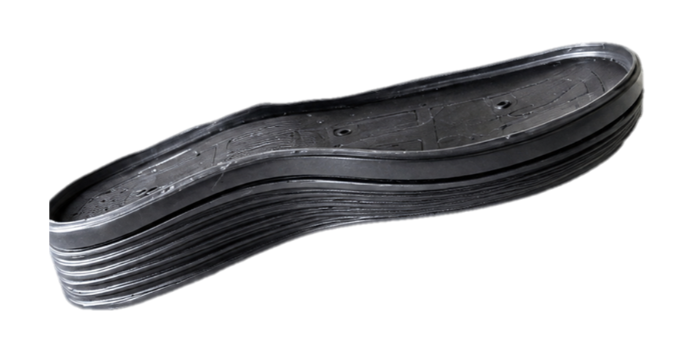
With the core concept validated, we moved to our first dedicated sole prototype: a standalone rubber outsole engineered with ridged, grooved patterns. The intent was to create a mechanical interlock between the sole and the shoe's upper, removing dependency on adhesives or stitching.
Upon testing, the interlock did not hold under wear stresses. Root cause analysis revealed two main issues:
- Insufficiently precise tolerances between the interlocking features.
- Rubber's inherent flexibility, which made a purely rubber-based mold difficult to keep dimensionally stable during interlock.
Why it matters: Failure at this stage was valuable. It told us precisely where the mechanical design needed rework — namely tighter tolerance control and a more rigid structural channel.
Prototype 3: First MVP with Functional Challenges
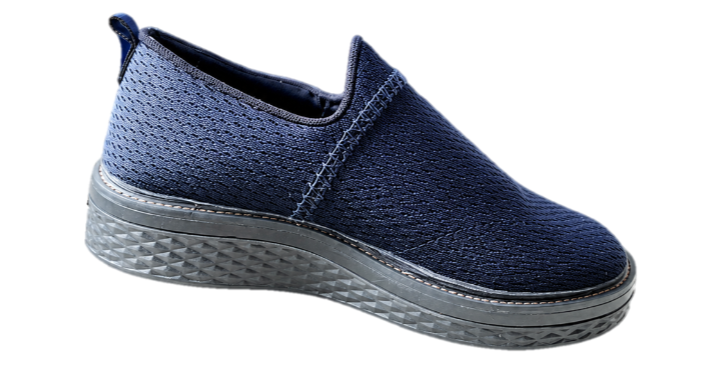
Armed with lessons from Prototype 2, we built our first genuinely wearable Minimum Viable Product: a mesh slip-on shoe with an integrated sole. For the first time, someone could put the shoe on and walk in it!
However, real-world wear testing surfaced functional issues including fit inconsistency, bonding weakness during repeated flexing, and faster-than-acceptable wear.
Why it matters: This stage answered the most important early question in footwear development — "can this actually be worn?" with a qualified yes, providing a clear engineering punch list to solve before scaling.
Prototype 4: First 3D-Printed Prototype — Interlocking Issues
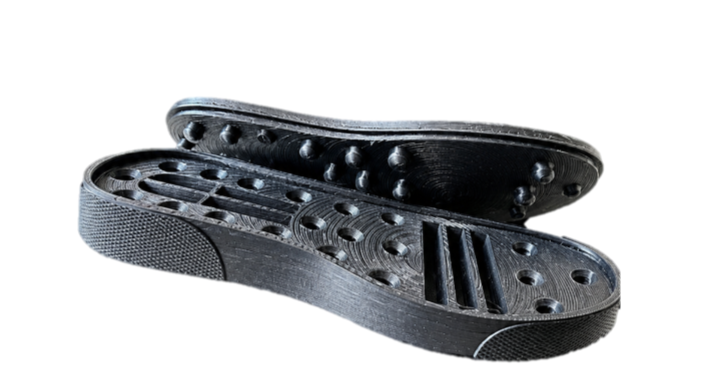
To break out of the precision limitations of hand-cast rubber, we brought in 3D printing. 3D printing let us iterate on interlocking pin, groove, and hole geometry with far greater dimensional accuracy, at a fraction of the cost and time of traditional mold-based tooling.
Despite improved precision, the interlocking pins still failed to seat correctly into channels under physical load testing.
Why it matters: This stage dramatically accelerated development velocity from weeks per iteration down to days, validating 3D printing as a crucial rapid-prototyping tool.
Prototype 5: Refined 3D-Printed Prototype
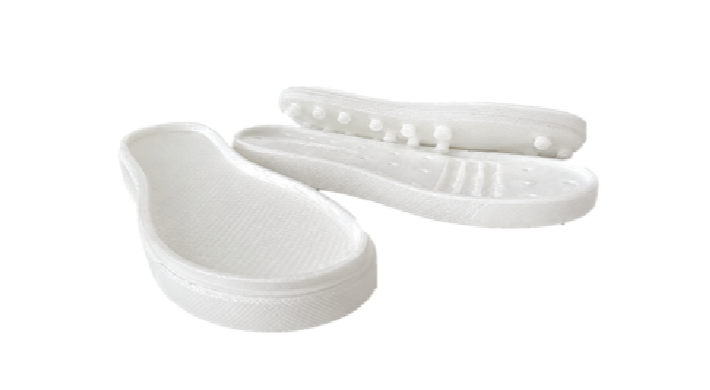
Using precise data from Prototype 4, we refined the pin, knob, and channel geometry to achieve a tighter, secure mechanical interlock. This wasn't a redesign from scratch; it was a targeted, data-driven refinement of specific dimensions.
Why it matters: This is where our proprietary interlocking sole attachment system matured from a promising idea into a validated, repeatable engineering solution — resolving the single biggest technical risk on the roadmap.
Prototype 6: Final MVP Development
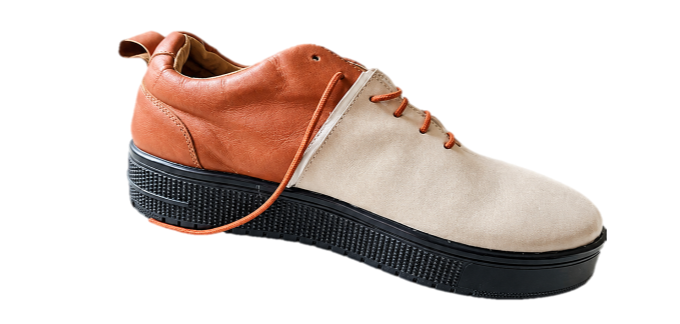
With the interlock mechanism proven, we shifted focus to translating the refined design into premium, real-world materials: genuine leather uppers in tan and cream tones, paired with the validated sole architecture.
Why it matters: Represents the transition from "engineering test rig" to a genuine consumer product that looks, feels, and performs like something ready for retail.
Prototype 7: The Final PU-Cast Prototype
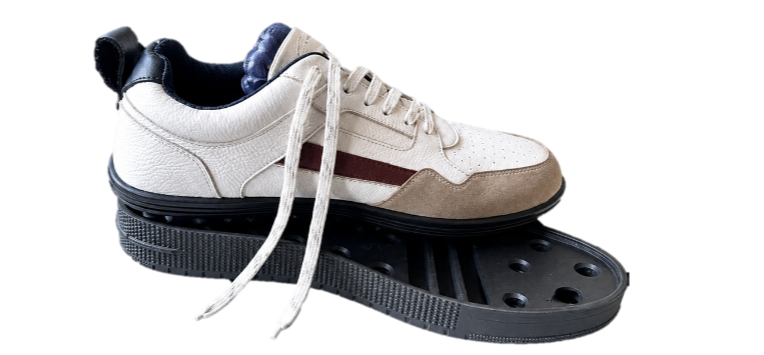
In our final stage, we transitioned from 3D-printed soles to PU (Polyurethane) casting — the industry-standard process used by major global footwear manufacturers for producing durable, lightweight, flexible soles at scale.
PU casting involves injecting liquid polyurethane into a precision mold, curing into a durable sole with consistent cushioning superior to 3D-printed materials for long-term wear.
Why it matters: This final stage signals to investors and partners that the product is production-ready — moving from prototyping to scalable manufacturing.
The Business Case: Why Modularity Makes Financial Sense
Beyond sustainability, Schault's business model is built on razor-and-blade economics with high-margin recurring part replacements:
- Base shoe: ₹3,000 selling price (₹1,500 manufacturing cost, ~50% gross margin).
- Replacement upper: ₹2,000 — Replacement sole: ₹1,000 (both recurring high-margin revenue).
- Roughly 50% of customers are expected to buy at least one replacement component, effectively doubling customer lifetime value (LTV).
- Projected 3-year revenue: ₹1.50 crore across 5,000 pairs sold with an LTV/CAC ratio above 3x.
Founder Insight: Sustainability and recurring revenue aren't in tension in the Schault model — they're the exact same design decision.
What Seven Prototypes Taught the Founders
- Fail fast: The faster you test an idea, the faster you learn whether it's worth pursuing.
- Build in public: Sharing the journey openly brought feedback and validation the team couldn't have generated alone.
- Iteration beats perfection: None of the early prototypes were perfect — progress came from continuous, incremental improvement.
- Sustainability requires real innovation: Reducing waste isn't only about eco-friendly materials — sometimes the product itself has to be redesigned.
Conclusion & Call to Action
Seven prototypes. Dozens of failures. Hundreds of design revisions. What began as an experiment with cardboard and nails has evolved into a patented modular footwear system designed for a sustainable future, with a manufacturing partner onboarded.
Schault is currently raising a ₹1 crore pre-seed round to launch its D2C website, hit its first 2,000 pairs sold, and validate an LTV/CAC ratio above 3x within 12–15 months.
Interested in joining our journey?
Reach out to Harsh Maheshwari (Founder & CEO) at harshm23@iitk.ac.in or +91 8755054200.
Explore our modular collections on Schault Shop or customize your pair in our 3D Customizer.